Archives for the month of: July, 2023

If you have spent time in or even visited any yeshivah in America or Israel, you may have seen many of the seforim (Torah books) having black tape on the outside and strings on the inside.
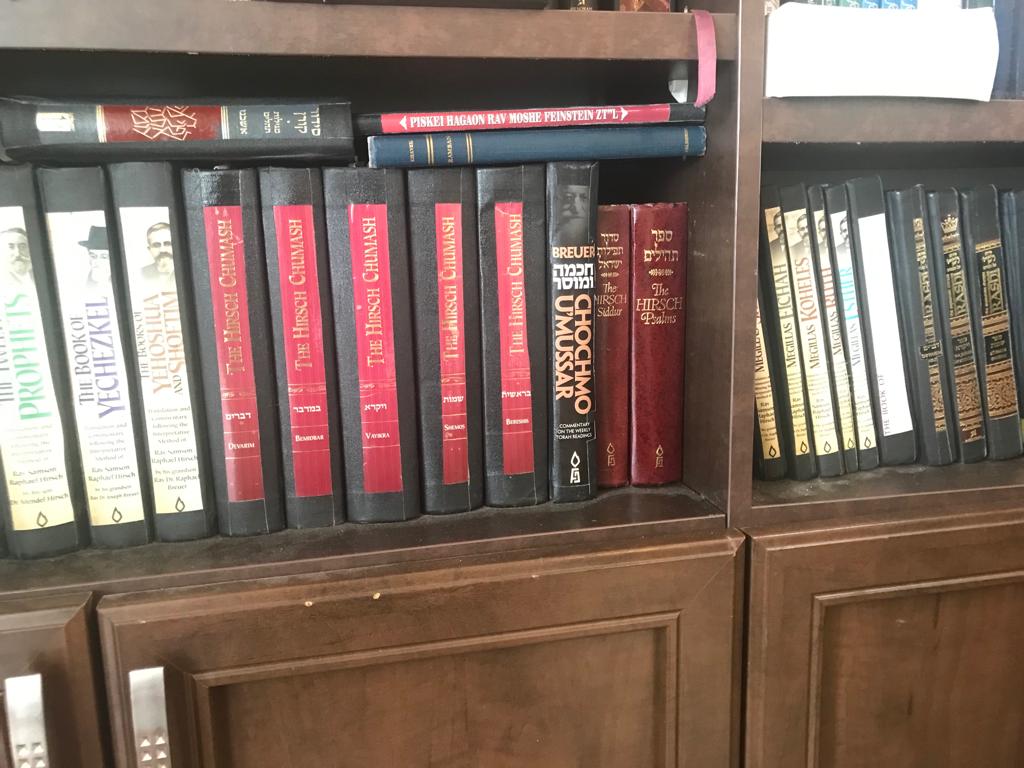
What is that weird stuff for? What is the reason that they put string and tape on all those books?

Why Choose Bookbinding?

First things first. The whole point of the seforim in Yeshivas is for them to be used with a lot of love. Lots of love means tons of use. The goal in places like these is to keep the seforim for as long as possible. As per the last post on preserving the longevity of your books, those measures are nigh impossible to do with a library that has its books constantly taken off the shelf and used, getting coffee spilled on them and the like.

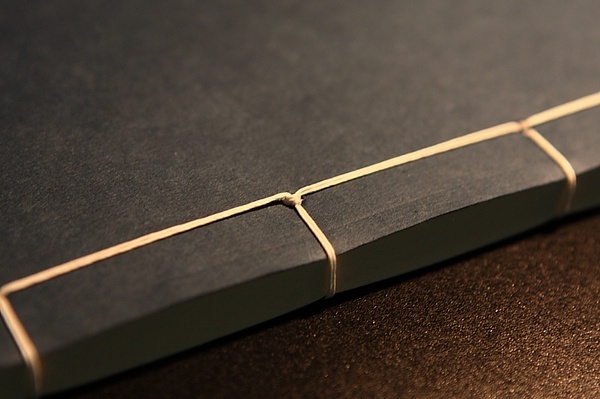
Because of these reasons, it is hard to make sure that the seforim are able to be used for a long time. Most yeshivahs and many shuls opt to do what I call the “Yeshivish” binding method. This method is akin to the traditional Japanese or Chinese binding with added tape on the outside.
Bookbinding Preserves the Longevity of Your Books

What are the benefits of this method? Could “defacing” and poking holes in a book actually preserve it?

The answer is yes. What this method of book preservation does reinforces the original binding of the book. This is the kind of bookbinding that I do.

Supplies to Get Started Bookbinding
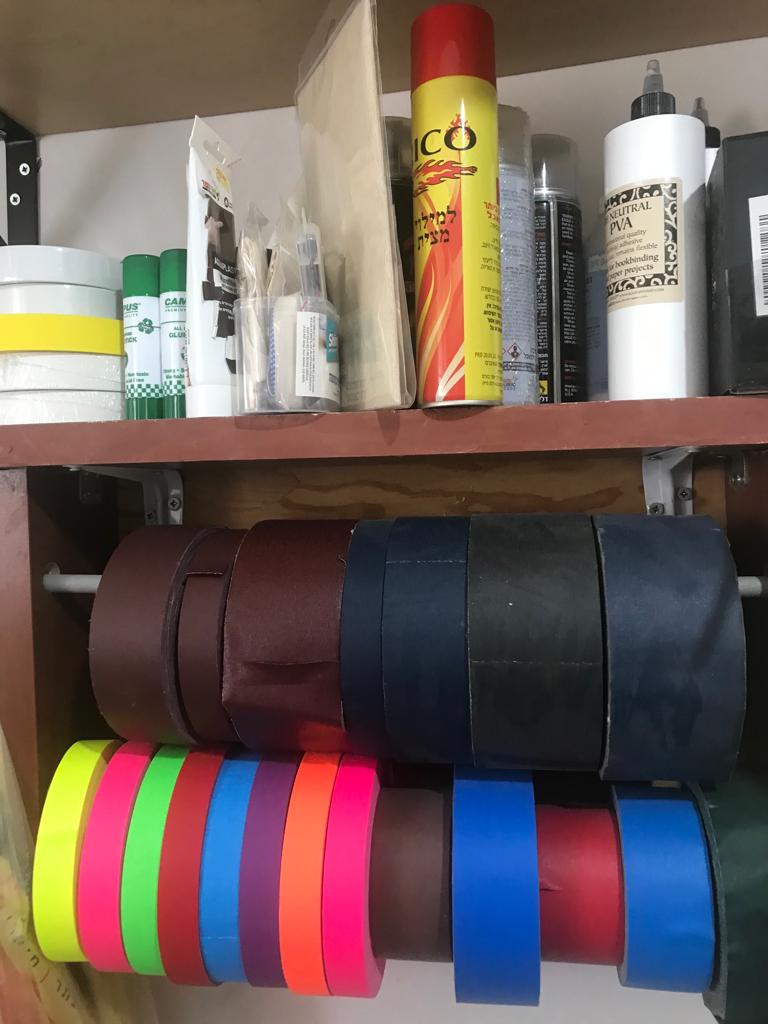
Now that we know the reason for doing this type of binding to a book, we need to know what tapes, strings, drill bits and the like are best to use.

When it comes to the “Yeshivish” binding, what size drill bit do you need? You will need a 2.5 mm long drill bit and wax-coated string. This is my go-to string.

Now that we discussed the bit to make the hole and the string to fill the hole, what type of tape do we use for the outside of the book? Some think that the proper tape is duct tape. However duct tape is not a great tape in most uses but particularly bad when doing bookbinding. It leaves a terrible residue and is sticky when it wears off. The best type of tape to use is Gaffer’s tape. Gaffer’s tape is traditionally used in theater productions and usually does not leave residue when it needs to be replaced or moved due to error of placement.

Now, there are a few Gaffer’s tape companies that I have found works best in the last 17 years of doing the “Yeshivish” binding. The companies are Shurtape, Pro Gaff, Gaffer Power, and Polyken. I also found that Bron Tape inc. makes an amazing gaffer tape but have only seen it on ebay, and it is hard to find.

When doing the “yeshivish” binding, it is advisable to put tape on the hinge right inside the cover. Ideally one would put white gaffer tape there.

While the other companies mentioned above would work, I try to use a thinner gaffer’s tape that I don’t like as much for the outside. This company is called Welstik. This company is good but just doesn’t meet my standard for putting on the cover.

Other materials needed are a bone folder, box cutter, exacto knife, good scissors, and a lighter to bind the string together after you tie the knot).   

It should go without saying that you will need some sort of drill, hand drill (any household drill will work) or drill press.

Next blog will detail the process of actually fixing and putting the binding in the book.

**I am an Amazon Affiliate and may receive a commission on purchases made through the links on this page, at no extra cost to you.**

**I am an Amazon Affiliate and may receive a commission on purchases made through my links below, at no extra cost to you.**

I confess. I own a lot of books. Somewhere in the range of 700 of them. I’m pretty passionate about books, seforim,  and learning. You must be, too if you are here. You might be wondering how you can protect your many, many books so that they last and remain in good condition for a good long time. How can you “fix” books that are in bad shape? As a bookbinder, this is another passion of mine. Let me share my top tips on how to keep your books in great condition.

There are some easy ways to keep books to extend their life. Some ways are more invasive than others. 

Optimal Placement for Books to Safeguard Against Harmful Environmental Conditions

Before we choose the method of preservation, we need to see what shape the book is in and how rare the book is or important the book is to you.

If the book is rare or of a particular sentimental value then make sure the book is kept in the right place in your house. For example, UV rays from the sun will bleach any part of the book that comes in direct contact with the light. So don’t leave your books opposite big open windows that the curtains are usually put to the side to let the light in.

Contrary to what one might think, leaving books spine-out could harm them due to the fact that gravity may start to pull the book off the hinges of the cover. So perhaps important books should be left lying down and not upright.

For all books, humidity is their kryptonite. As such, books should be kept far away from moisture and condensation. One should try to keep books away from fridges, washers, and dryers.

Protective Covers for Preserving Books

So now that we know what not to do, what can we do to ensure our books have a long and healthy life of use. One way to protect our books is to cover them. For instance, a clear library quality acid free book cover protects against dust and debris. Doing this will enable us to display our libraries in the traditional way. 

Another protective cover that is less pretty is the book sleeve. The book sleeve is great for books that we use on the go. 

What Are the Best Shelving Solutions for Preserving Books?

When looking for the type of shelving to display our books, the type of wood that makes the shelves would help how the shelves are displayed. Some woods are better at capturing moisture than others. Ideally, you would have shelves professionally made by a carpenter/ woodworker. They would be able to advise you. 

Of course, this is expensive and not viable for most people. So what type of shelving should the average bibliophile get? 

I know this seems totally sellout-ish but Ikea has many great bookcases. The Billy bookcases are good – try to get double-thick shelves that will stand up to those hefty tomes like your Tur Shulchan Aruch set Chosson Shas. A regular shelf will bow under the weight of your books, and this will put undue pressure on their spines.

You might also use bookshelves with doors or glass fronts to protect the books from dust and debris.

Be Mindful of Pests 

Insects such as silverfish and bookworms can cause irreversible damage to books by feeding on paper fibers. Regularly inspect your books for signs of infestation and take necessary measures to prevent pests from accessing your collection.

Reinforcing Your Books’ Binding

The most drastic way of preserving our books would be the “yeshivish” binding. This binding is akin to traditional Japanese binding. More on book storage and some more invasive book preservation techniques in a later post.

**I am an Amazon Affiliate and may receive a commission on purchases made through my links below, at no extra cost to you.**

I understand that it may seem cliché, but it can be challenging to mourn for a building that was destroyed almost 2,000 years ago. However, as we observe the progression of the Jewish calendar into the Three Weeks and Tisha B’Av (the 9th of Av), it’s crucial to find ways to make our fast days meaningful and to properly mourn the loss of the Beis Hamikdash (Holy Temple).

First and foremost, I truly believe that learning Megilas Eicha (Lamentations) and the history of the Roman destruction of Bayis Sheini (the 2nd Temple) can help put a person in the right frame of mind as we approach the most bitter time of the Jewish year. Two books I would recommend are History of the Jewish People vol. 1- 2nd Temple Era (Artscroll) and Josephus’ Wars of the Jews. (Meam Loez is also good and gives some moral instruction.)

Another level to add to the proper mindset for the mourning of the Three Weeks is to study Kinos – the poems of mourning that are specifically read on the morning of Tisha B’Av). I have found the Mesorat Harav Kinos to really be helpful in learning about the deeper meaning of kinos. I always like more than one approach to a topic, and the now-classic Artscroll kinos also help give great interpretations to the kinos. That being said, classical Jewish literature teaches that when the prophet Yirmiyahu (Jeremiah) found out that the righteous Yoshiyahu Hamelech (King Josiah) died, he composed a dirge to show his mourning. The connection between this dirge and the kinos written about the Mikdash teach us that the death of a righteous person is like the destruction of the Temple. 

Historically we also know that there were kinos written about the destruction of Ashkenazi communities during the era of the crusades as well as one written about the French burning of the Talmud in Paris  

From this we can extrapolate that we should also learn about more recent tragedies of national importance such as the Holocaust. Some books that have helped me get into the proper mood for these sad days that are upon us are Unheeded Cry, Heroine of Rescue, To Vanquish the Dragon, The Forgotten Memories, The Klausenberger Rebbi, A Blaze in the Darkening Gloom, and Rav Gustman to name a few.

Preparing for a meaningful Tisha B’av starts by reviewing and learning about related subject material well beforehand. Make sure to leave yourself time to prepare!

1690384620

  days

  hours  minutes  seconds

until

Tisha B’av